Ninety Minutes on the Floor: A Field Guide to Judging a Ningbo Factory After the Slide Deck Ends
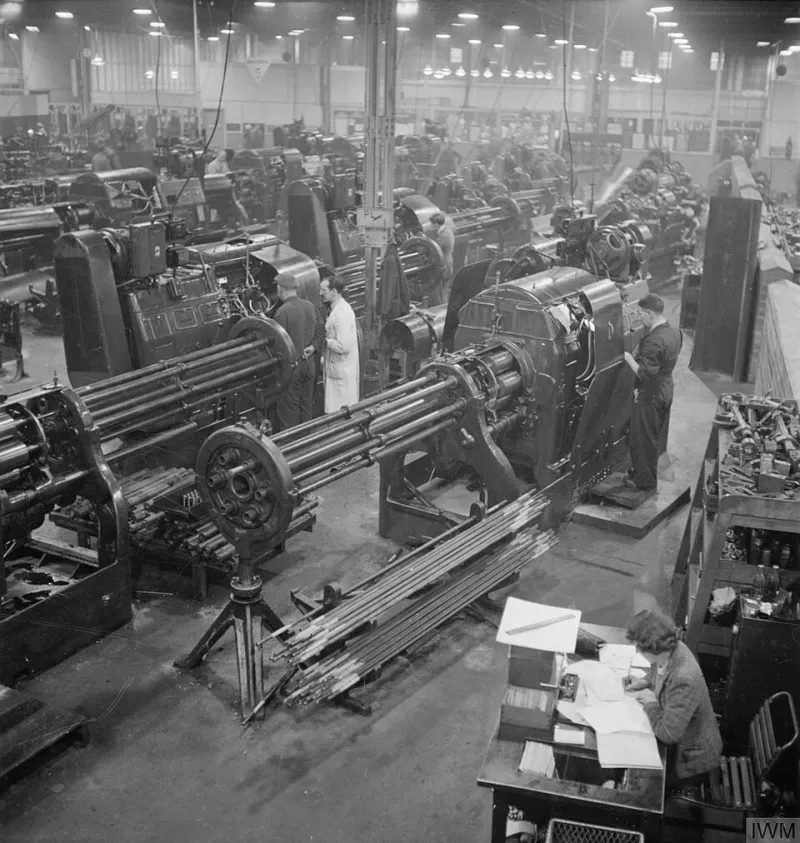
Photo: Richard Stone, Public domain, via Wikimedia Commons
The presentation is polished. The factory tour video is well produced. The quality manager has a folder of certificates, and someone has printed your company name on a banner near the entrance. Then the meeting ends and the real evaluation begins, in the ninety minutes you have on the floor itself.
A short visit cannot be a full audit, and it should not try to be. What it can do is sample for evidence of operational maturity. Mature plants leave physical traces everywhere: in how material moves, in what sits between stations, in whether the calibration sticker on a gauge is current, in how a line operator answers a question when the supervisor is standing behind her. These signals are difficult to stage and easy to read, provided the visitor knows what to look for.
Control the Route Before You Control the Questions
Ask to begin at goods receiving and walk upstream against the flow of material. Left to their own devices, hosts will route a visitor along the cleanest corridor and past the newest equipment. Starting at receiving accomplishes two things: it gives you the plant's real front door as a baseline, and it forces a sequence that mirrors the production process rather than the marketing narrative.
Bring a notebook. Write down what you see before discussing it. Impressions decay quickly once the conversation moves to pricing.
The Ten Signals Worth Your Attention
1. Material flow. Trace the actual distance a part travels from receipt to shipping. Look for backtracking, for forklift traffic crossing pedestrian walkways, and for finished goods stored next to raw material. A plant that has never mapped its material flow will usually reveal a layout shaped by historical accident rather than process logic.
2. Work-in-progress discipline. WIP is money sitting on the floor. Is it bounded — a defined maximum per station — or is it a pile that grows until someone intervenes? Are containers labeled with part number, quantity, and status? Unbounded, unlabeled WIP signals a process that is being managed by expediting rather than by schedule.
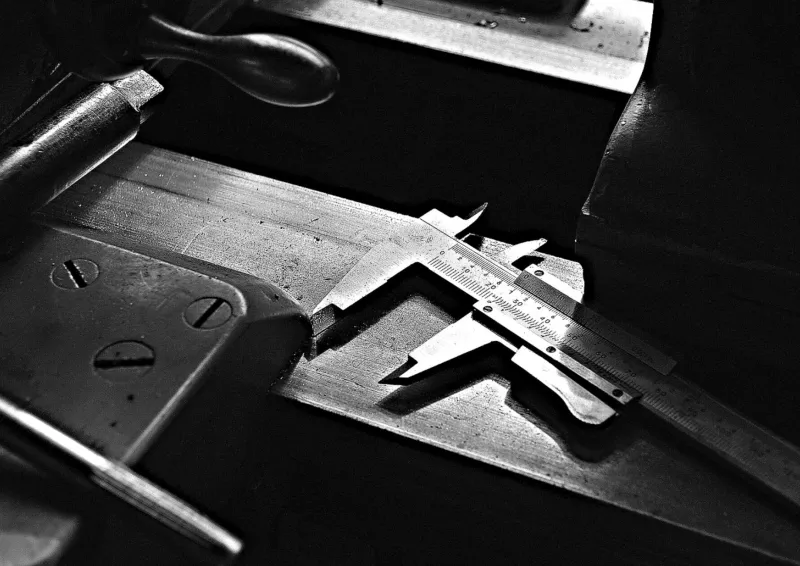
3. Calibration labels. Look at three gauges at random. Check the sticker date and the identification number. Then ask who performs calibration and where the records live. A plant with an in-house metrology lab and an accredited external calibration partner will answer immediately. A plant that has to find someone to answer is telling you something.
4. Tooling maintenance. Ask to see the tool room or the mold storage area. Molds should be identified, racked, and logged, with a visible record of the last service and the number of shots or cycles. Rust, unlabeled tooling stacked on the floor, or an inability to state when a mold was last cleaned are reliable indicators of how preventive maintenance is treated across the site.
5. Shift handover. This is one of the highest-value questions available in a short visit. Ask how the transition between shifts is managed, whether there is a written handover, and what happened at the most recent changeover. Plants with disciplined handovers can describe the format in detail. Plants without them describe it vaguely, or describe a verbal conversation between two supervisors.
6. The scrap bin. Ask what the scrap rate is, then look at what is actually in the container. The type of defect in the bin tells you what the process struggles with, and whether the parts look like setup scrap or production drift.
7. Measurement location. If inspection gauges sit at the workstation, the process is being controlled in real time. If every measurement happens in a locked room at the end of the building, quality is being confirmed rather than built in.
8. Visual management. Production boards should be updated today, not last Tuesday. Ask for yesterday's output against plan and watch how quickly the number arrives. A hesitation of more than a few seconds suggests the board is decorative.
9. Housekeeping. Not cleanliness for its own sake, but whether things are where they belong, whether aisles are clear, and whether the floor markings correspond to how people actually move. A plant that has genuinely implemented 5S will have toolboards with outlines and a place for everything.
10. How workers respond. Speak to two or three operators, with a supervisor present only if local practice requires it. Ask what the specification is for the part they are making, and what they do when a part does not meet it. A confident, specific answer is a strong positive signal. An answer directed at the supervisor rather than at you is a signal about culture, not about the individual.
Questions That Reveal More Than the Answers
Three questions tend to produce disproportionate insight in a short visit.
- 'Show me your last three corrective actions.' The speed of retrieval matters more than the content.
- 'What was your most significant quality escape this year, and what changed afterward?' A plant that cannot name one is either very good or not measuring.
- 'Which customer requirements do you find hardest to meet?' The answer usually reveals the plant's genuine capability frontier.
A Simple Scorecard
Score each of the ten signals from one to three. A one means the signal was absent or contradicted. A two means partial or inconsistent evidence. A three means clear, verifiable evidence. Total the score, then consider the distribution: a plant that scores threes on maintenance and housekeeping but ones on WIP discipline and handover is telling you it invests in equipment and appearance rather than in process control.
Use the score as a conversation tool rather than a verdict. Asking a supplier to explain a low score is often more informative than the score itself, and it establishes that the relationship will be evaluated on evidence.
What Ninety Minutes Cannot Tell You
A short visit will not verify financial stability, capacity under load, or long-term consistency. It will not substitute for a formal audit, and it should not be presented internally as one. What it can do is eliminate suppliers who are clearly unprepared and elevate those who are clearly serious, which is often the most valuable filtering a procurement team can perform before committing engineering resources.
The conference room presents intent. The floor presents practice. Ninety minutes spent deliberately on the second is usually the better use of the trip.